
Doctoral student, and her bird, co-designed NomadicPerch, a felted wearable that temporarily turns a hand into a mobile perch.
Amazon partnership establishes Cornell AI security initiative
Artificial intelligence agents – also known as agentic AI – can now build and launch software based on a few prompts. But AI agents can produce incorrect, misleading, and even malicious code that hackers can exploit. Thanks to a gift from Amazon, Cornell will lead the development of safety protocols to shore up AI agents and the code they produce.

2026 LinkedIn grant recipients to drive innovation in GenAI, LLMs
A group of scholars from the Cornell Ann S. Bowers College of Computing and Information Science are receiving grants from the strategic partnership between the college and LinkedIn, the world’s largest professional network, to drive innovation in areas like generative artificial intelligence (AI), AI architecture, and large language models (LLM).
The Associated Press
Thickstun explains the reality of AI self-improvement

The Cornell Chronicle
Can AI boost open-mindedness? Team wins $1.49M grant to find out
Cornellians
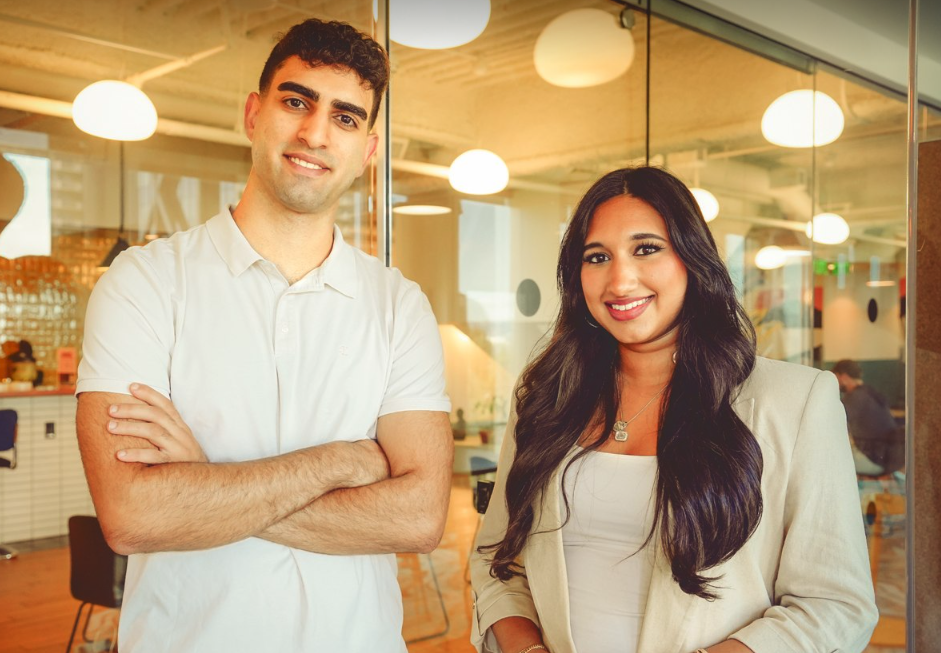
Two undergrads are using AI to help students learn calc and more
Cornell Chronicle
Research helps NYC students aim higher in public high school applications
Cornell Chronicle
Is there an AI bubble? No, but some tech companies show signs
CNN
Susser and Vidan talk about “watermarks” that will soon be in some AI-generated text
Cornell Chronicle
Today’s clicks can reveal tomorrow’s breakthroughs

Cornell Chronicle
Strike a pose: Creating more realistic multi-person images
Communications of the ACM
Wilkens discusses how to improve the historical accuracy of LLMs