

Course Development Team
This course is developed by leading experts at Cornell Bowers who are driving technology, humanity, and society forward as one. Their guidance will help you build both practical skills and a critical understanding of AI’s role in shaping the future.
Instructor

LISA HUANG
Assistant Teaching Professor of Information Science
Lisa Huang is an Assistant Teaching Professor in the Department of Information Science at Cornell University. Her teaching and research focus on human-AI interaction in programming systems, with a particular interest in building programming support for non-programmers. She is also interested in understanding how programmers of all kinds reason about code and debugging, and how programming systems can be designed to better support their needs. Her work spans human-computer interaction, AI-assisted programming, and computing education, and has appeared in venues such as CHI, ICSE, SIGCSE, and VL/HCC.
Co-Instructor
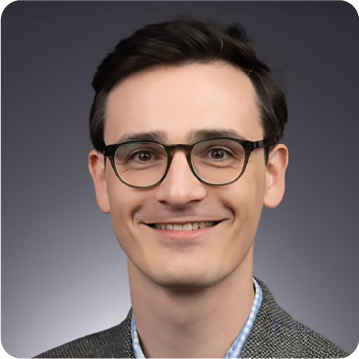
Rene Kizilcec
Associate Professor of Information Science
Rene Kizilcec is an associate professor of information science at Cornell, where he directs the Cornell Future of Learning Lab. Kizilcec studies behavioral, psychological, and computational aspects of technology in education to inform practices and policies that promote learning, equity, and academic and career success. His work has appeared in Science and the Proceedings of the National Academy of Sciences, won multiple awards, and is funded by the National Science Foundation, Schmidt Futures Foundation, and Jacobs Foundation. Kizilcec holds a Ph.D. in communication and M.Sc. in statistics from Stanford University.
Advisors
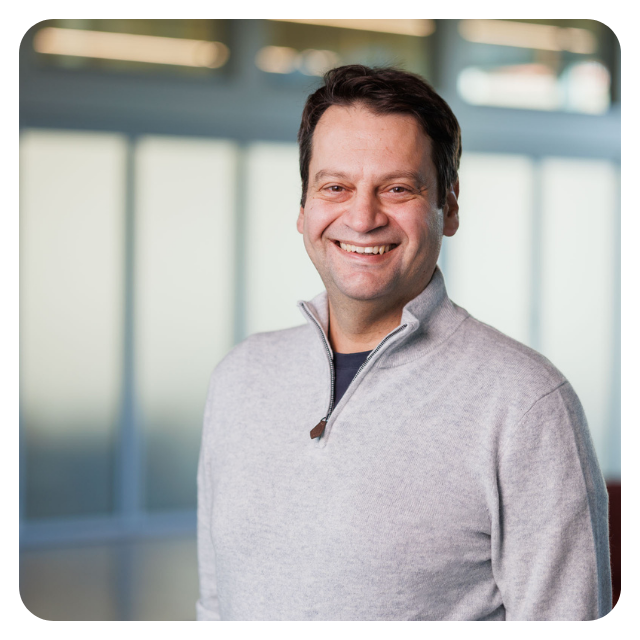
SORIN LERNER
Dean, Cornell Bowers
Professor of Computer Science
Sorin Lerner is the dean of the Cornell Ann S. Bowers College of Computing and Information Science. A professor of computer science, his research focuses on providing programmers with tools to make software more secure and reliable. Prior to joining Cornell, Lerner served as chair of the Department of Computer Science and Engineering at the University of California, San Diego. There, he helped guide the launch of a new major in artificial intelligence, as well as an online master of data science program, the first fully online degree program at the university.

MATTHEW WILKINS
Associate Dean for Education
Associate Professor of Information Science
Matthew Wilkens is the associate dean for education and an associate professor of information science. He uses quantitative and computational methods to study large-scale developments in literary and cultural history. His work has focused in particular on literary text mining, geolocation extraction, genre detection, and the cross-pollination of critical and social scientific methods. He also seeks to develop and apply natural language processing and artificial intelligence methods to large-scale datasets in domains including medicine, public health, economics, and the law.
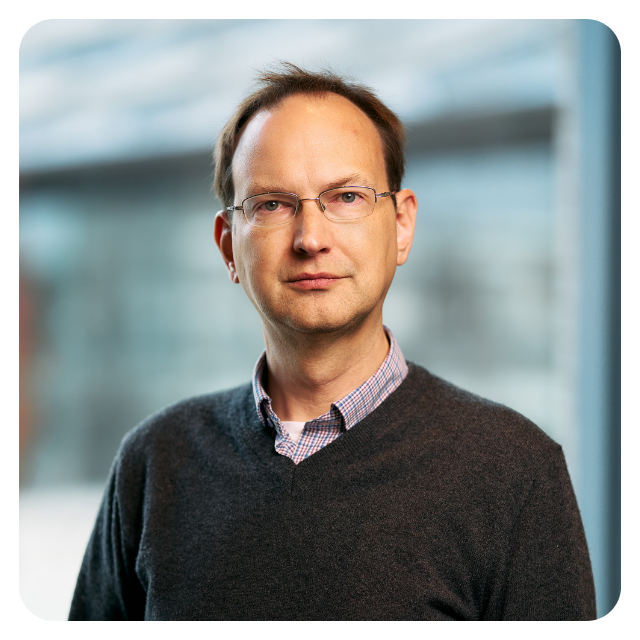
DAVID MIMNO
Department Chair, Information Science
Professor of Information Science
David Mimno is a professor and chair of the Department of Information Science. He holds a Ph.D. from UMass Amherst and was previously the head programmer at the Perseus Project at Tufts and a researcher at Princeton University. His work has been supported by the Sloan foundation, the National Endowment for the Humanities, and the National Science Foundation.
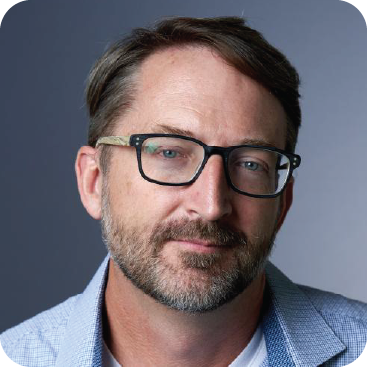
STEVE JACKSON
Professor of Information Science
Vice Provost for Academic Innovation at Cornell
Steve Jackson is a professor of information science and science & technology studies, with additional graduate field appointments in communication and public affairs. He is also the former chair of information science and former dean of William Keeton House. Since July 2023, he has also served as Vice Provost for Academic Innovation at Cornell.