
Become an expert in AI, from building systems to real-world applications.
Starting in Fall 2027, Cornell Bowers is offering two online master's programs in artificial intelligence, each designed for anyone seeking to deepen their expertise in AI. Whether you want to build AI systems from the ground up or transform your profession by applying AI where it matters most, there's a path for your specific career goals.
- The M.S. in artificial intelligence is for professionals who want to understand how AI works and build intelligent systems from first principles, with rigorous training in the mathematics, architectures, and evaluation methods that power modern AI.
- The M.S. in applied artificial intelligence is designed for professionals who want to harness AI within an established field or industry, developing the skills to integrate AI into real-world practice, solve complex challenges, and drive innovation in their organizations.
Both programs pair academic rigor with meaningful faculty engagement, delivered in a flexible online format. Students work closely with Cornell faculty, customize their studies through specialized tracks, and participate in immersive residential experiences on campus that deepen learning and forge lasting connections with classmates and instructors.
Cornell – shaping what's next in AI since 1956
#3 in AI
Ranked #3 in AI among U.S. institutions by CS Ranking, Cornell Bowers continues to innovate in the field of AI, with faculty conducting award-winning research in areas such as human-AI interaction, robotics, cybersecurity, computational sustainability, and AI trust and accessibility.

A founding force in AI
Cornell University played a foundational role in the development of AI. In 1956, Cornell Ph.D. graduate and "father of deep learning," Frank Rosenblatt ’50, Ph.D. ’56 (pictured above), demonstrated the perceptron – the first machine that could learn to classify what it saw. Every deep learning system in use today descends from that algorithm. Cornell went on to found one of the world's first computer science departments in 1965, and its faculty have twice won the Turing Award, commonly referred to as the Nobel Prize in computing.
Faculty at the forefront.
Cornell Bowers faculty are pushing the boundaries of artificial intelligence across machine learning, robotics, computer vision, natural language processing, human-centered AI, and more. You'll learn from world-renowned researchers whose discoveries influence industry, policy, and society. Their expertise brings the latest advances, emerging challenges, and real-world applications directly into the classroom, preparing you to lead in a rapidly evolving field.
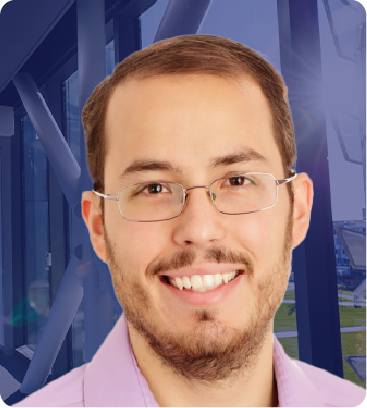
Benjamin Soltoff
Associate Teaching Professor in Information Science
Director, Online Master's Program in Artificial Intelligence
Benjamin Soltoff is an associate teaching professor in information science. He teaches courses on data science, machine learning, research design, and data communication, and enjoys working with individuals from all backgrounds interested in applying computational methods to extract knowledge and inferences from a wide range of domains.
View profile
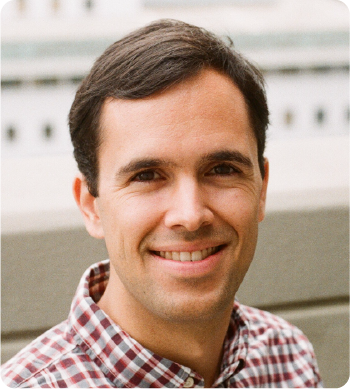
Anil Damle
Associate Professor, Computer Science
Anil Damle is an associate professor of computer science. His research focuses on the development and analysis of robust and efficient algorithms in applied and computational mathematics that exploit structure coming from underlying physical or statistical models. He interfaces with a broad range of application areas and his work is inherently interdisciplinary – with the ultimate goal of developing algorithms that are usable for practitioners.
View profile
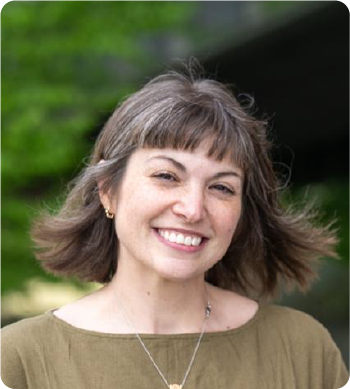
Karen Levy
Associate Professor, Information Science
Karen Levy is an associate professor of information science, an associate member of the faculty at Cornell Law School, and field faculty in sociology, science and technology studies, media studies, and data science. She researches the legal, organizational, social, and ethical aspects of data-intensive technologies, particularly the impact of data-intensive technologies on work and workers. She is interested in what happens when we use digital technologies to enforce rules and make decisions about people, particularly in contexts marked by conditions of inequality.
view profile
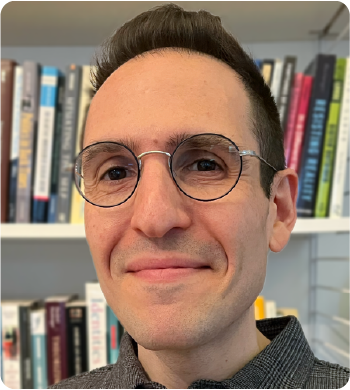
Daniel Susser
Associate Professor, Information Science
Daniel Susser is an associate professor of information science. His research focuses on ethics, politics, and policy in computing. A philosopher by training, he studies governance problems raised by new and emerging data-driven technologies and the underlying conceptual and normative problems that make it difficult to understand and tackle them. He has broad interests in technology ethics and policy, philosophy of technology, and science and technology studies, especially critical questions about data, privacy, and the ethics of automation.
View profile
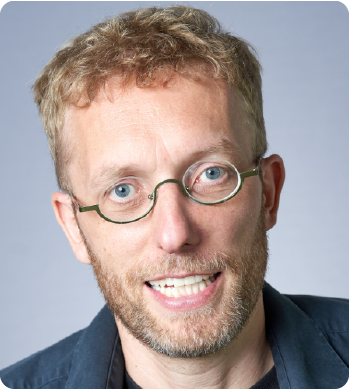
Kilian Weinberger
Professor, Computer Science
Kilian Weinberger is a professor in the Department of Computer Science at Cornell University. Weinberger's research focuses on machine learning and its applications. In particular, he has worked on learning under resource constraints, metric learning, AI in science, computer vision, autonomous vehicles, Gaussian processes, and deep learning.
view profile