Becoming a researcher means accepting that the pursuit of new and exciting hypotheses often leads to dead ends.
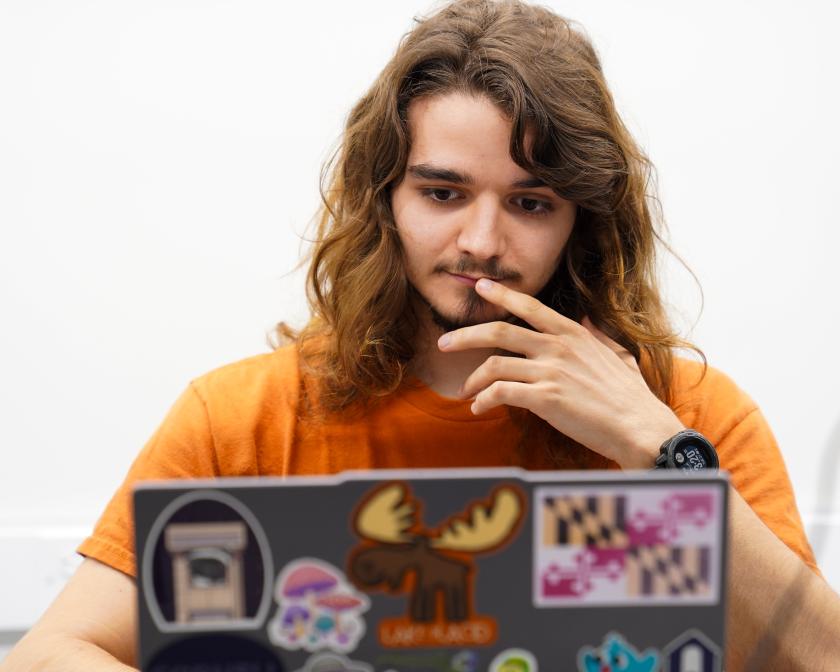
“But it would be nice if an idea just worked one of these weeks,” joked Myles Pasetsky ‘27, a computer science major who spent his summer studying how to improve the real-world hardware performance of robotic arms trained in simulation. “I guess that means more chances to come up with new and exciting questions.”
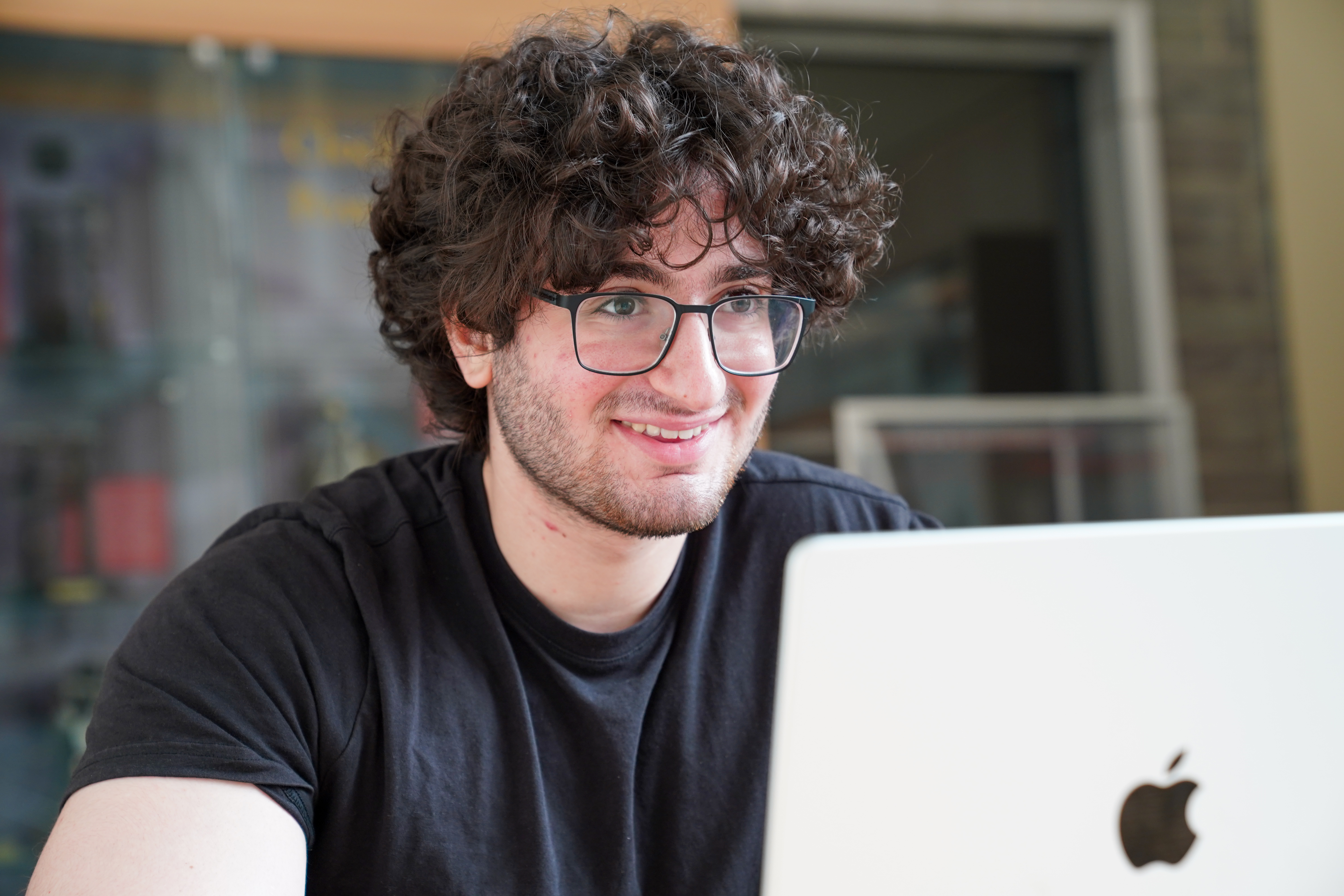
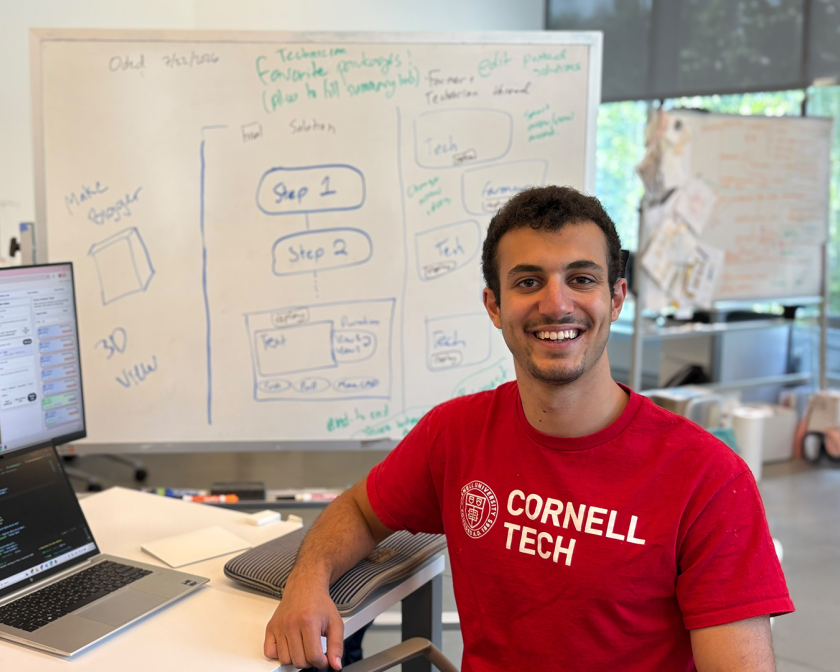
Pasetsky was one of 60 undergraduates from the Cornell Ann S. Bowers College of Computing and Information Science who participated in this year’s Bowers Undergraduate Research Experience (BURE). The 10-week, paid summer program lets undergraduate students do real-world research alongside their choice of roughly 40 participating Bowers faculty and their graduate students. “Is research something I’d like to pursue?” “Would graduate school be the right fit?” – BURE exists to help aspiring researchers answer these questions.
“A lot of students want to get involved in research, and it is generally a bit competitive, probably harder than it has to be to get involved,” said Pasetsky, whose robotics project was advised by Sarah Dean, assistant professor of computer science, and Preston Culbertson, assistant professor of computer science. “BURE is one release valve.”
Along with hands-on research opportunities, BURE deepens the summer research experience with weekly seminars from participating Bowers faculty and practical talks from Anshuman Mohan, a doctoral student in the field of computer science, about life as a research student.
Since launching in 2023, BURE has been a springboard for dozens of undergraduate researchers who’ve gone on to author published papers, win undergraduate research awards, and ultimately pursue doctoral degrees. All Cornell Bowers undergraduate majors can apply.
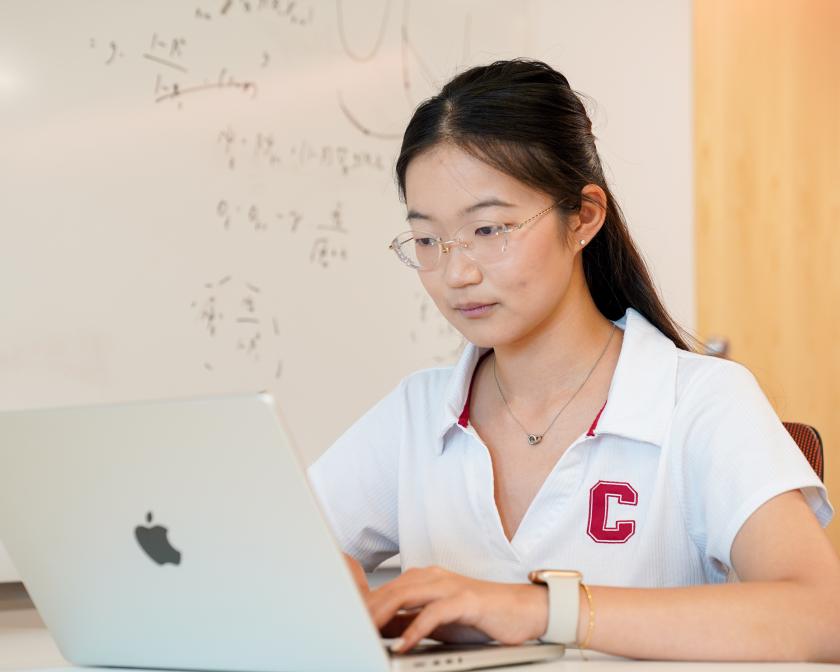
Cindy Weng ’27, a statistics and economics major, had some research experience in high school that involved analyzing existing datasets for insights. Her research project this summer, as a BURE student, was more rigorous and more in line with real-world research, she said. Weng worked with Dan Kowal, associate professor of statistics and data science, and simulated datasets to extend Kowal’s alternative statistical method for identifying and estimating disparities among groups, like wages between men and women or one hospital’s quality of care versus another’s. Weng’s work helped determine the drivers behind those disparities.