
The Cornell Ann S. Bowers College of Computing and Information Science added 13 faculty members as part of the 2025-2026 recruiting season, strengthening the college’s expertise in artificial intelligence, machine learning, interactive technologies, human-AI interaction, and more.
Of the 13 hires, eight will join the Department of Computer Science; three will join the Department of Statistics and Data Science, and two will join the Department of Information Science.
“These new faculty members build on our college’s world-class expertise, infusing talent in key research areas and strengthening our vision to bridge technology and humanity for the greater good,” said Sorin Lerner, dean of Cornell Bowers. “I am thrilled to welcome these pioneering researchers to the Bowers community – and am ecstatic for our students, who continue to learn from the best and brightest minds across tech.”
Five faculty will begin teaching this fall: Diana Cai, Lisa Huang, and Erasmo Tani, all based in Ithaca, and Ayush Sekhari and Amrith Setlur, both based at Cornell Tech in New York City. The remaining eight will begin next year.
Cornell Bowers celebrates the addition of these new faculty members
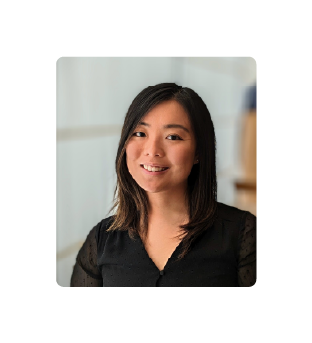
Diana Cai, assistant professor of computer science
Beginning Fall 2026
In her research, Cai designs and analyzes probabilistic machine learning methods for scientific discovery. She is motivated by real-world scientific constraints and develops methods in close collaboration with scientists across domains, including biology, chemistry, and physics. Previously, Cai was a research fellow in the Center for Computational Mathematics at the Flatiron Institute.
She completed her M.A. and Ph.D. in computer science from Princeton University, and received an M.S. in statistics from the University of Chicago, and an A.B. in computer science and statistics from Harvard University. Her work has been recognized by a Google Ph.D. Fellowship in Machine Learning, Rising Stars in EECS, a Rising Stars in Machine Learning Award from the University of Maryland, a School of Engineering and Applied Science Award for Excellence from Princeton University, and spotlight paper awards at the Conference on Neural Information Processing Systems (NeurIPS) and International Conference on Machine Learning (ICML).
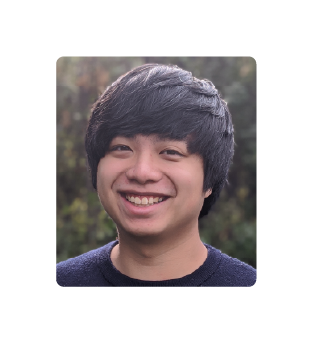
Alan Cheng, ‘17, M.Eng. ‘18, assistant teaching professor of information science
Beginning Summer 2027
Cheng’s focus is on the design and development of engaging, interactive learning technologies. His research interests include educational technology, human-computer interaction, and learning sciences, and his research has appeared in venues such as the Conference on Human Factors in Computing (CHI), User Interface Software and Technology (UIST), and the Special Interest Group on Computer Science Education (SIGCSE), among others. Cheng received a Ph.D. in computer science from Stanford University, and bachelor’s and master of engineering degrees in computer science from Cornell.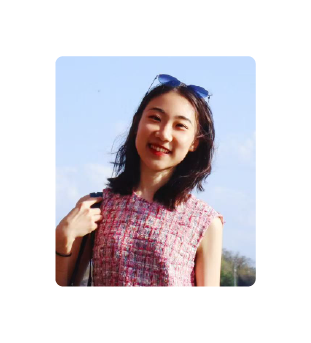
Jiawei Ge, assistant professor of statistics and data science
Beginning Summer 2027
Ge’s research lies at the intersection of statistics, machine learning, and artificial intelligence. She develops principled and computationally efficient methods for learning from large, heterogeneous data, with the broader goal of building reliable and trustworthy AI systems. Her research has received recognition from leading journals in statistics and econometrics, including The Annals of Statistics and the Journal of Econometrics, and has appeared at premier machine learning venues, including NeurIPS, ICML, and the International Conference on Learning Representations (ICLR). Ge is currently a postdoctoral researcher in the Department of Statistics at the University of California, Berkeley. She earned a Ph.D. in operations research and financial engineering from Princeton University and a bachelor’s degree in applied mathematics from Fudan University.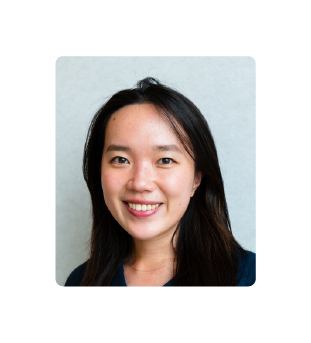
Lisa Huang, assistant teaching professor of information science
Beginning Fall 2026
Her teaching and research focus on human-AI interaction in programming systems, with a particular interest in building programming support for non-programmers. She is also interested in understanding how programmers of all kinds reason about code and debugging, and how programming systems can be designed to better support their needs. Her work spans human-computer interaction, AI-assisted programming, and computing education, and has appeared in venues such as CHI, International Conference on Software Engineering (ICSE), SIGCSE, and the IEEE Symposium on Visual Languages and Human-Centric Computing (VL/HCC). Before joining Cornell, Huang received her master’s and doctoral degrees in computer science from the University of California, San Diego, and a bachelor’s in computer science and cognitive and linguistic sciences from Wellesley College.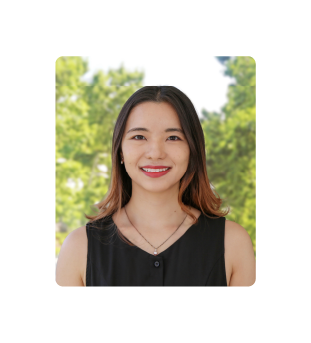
Yuka Ikarashi, assistant professor of computer science at Cornell Tech
Beginning January 2027
Ikarashi's research focuses on compilers and programming languages for high-performance computing, and she created the Exo programming language. Ikarashi has been awarded the Quad Fellowship, the Masason Foundation Fellowship, the Funai Foundation Fellowship, the ML and Systems Rising Stars Award, and the Rising Stars in EECS Award. She has previously worked at Apple, Amazon, and CERN, applying her research to a range of accelerators and applications. She earned her Ph.D. and M.S. from the Massachusetts Institute of Technology (MIT), and her B.S. from the University of Tokyo.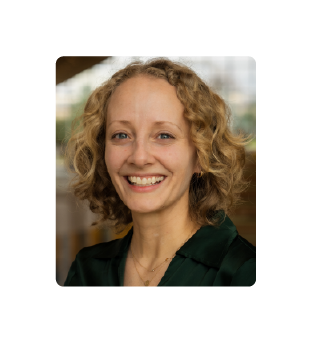
Amy Kuceyeski, professor of computational biology
Beginning Winter 2027
Kuceyeski’s research focuses on understanding how the brain works using imaging techniques and AI/computational methods. She uses tools from statistics, mathematics, and AI, including biophysical models of brain activity, to map brain circuitry underlying complex behaviors. Her interests span brain-behavior mapping in health and disease (stroke, multiple sclerosis, traumatic brain injury), women’s brain health, psychedelics, and neuroAI. She is also the co-director of the AI Core of the Ann S. Bowers Women’s Brain Health Initiative. Her work has appeared in Nature Methods, Nature Mental Health, Nature Communications, Communications Biology, NeurIPS, Medical Imaging with Deep Learning (MIDL), and others. Kuceyeski received her Ph.D. in applied mathematics from Case Western Reserve University, after which she joined Weill Cornell Medicine’s Radiology department as a postdoctoral fellow, working her way to full professor in 2023.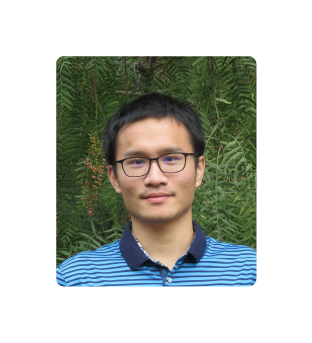
Licong Lin, assistant professor of statistics and data science
Beginning Summer 2027
Lin’s work focuses on the theoretical foundations and algorithms for AI. He uses and extends tools from statistical learning, high-dimensional statistics, and optimization to study the statistical foundations of architectures, algorithms, and phenomena in modern AI and to develop mathematically motivated algorithms for AI alignment. His research has appeared in the Annals of Statistics and the Journal of Machine Learning Research, and at venues such as NeurIPS, ICML, and others. Lin received a Ph.D. in statistics from the University of California, Berkeley, and a bachelor’s degree in statistics from Peking University. 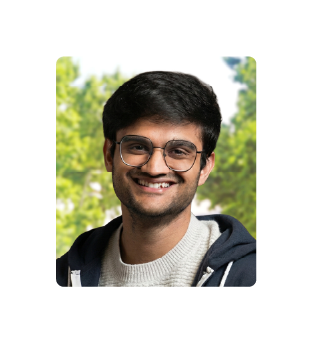
Pratyush Maini, assistant professor of computer science at Cornell Tech
Beginning January 2027
Maini studies how the data used to train artificial intelligence systems shapes what they learn, what they remember, and how reliably they behave. His research spans improving the quality and composition of pretraining data, generating synthetic training data, and understanding and mitigating unwanted memorization. More broadly, he seeks to make the development of foundation models more systematic, efficient, and accountable. His work has appeared at leading machine learning conferences, including NeurIPS, ICML, ICLR, Association for Computational Linguistics (ACL), and Conference on Language Modeling (COLM). He is a founding member of DatologyAI. Before joining Cornell Tech, Maini received a Ph.D. in machine learning at Carnegie Mellon University. 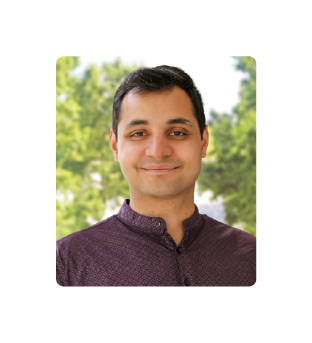
Ayush Sekhari, Ph.D. ‘22, assistant professor of computer science at Cornell Tech
Beginning Fall 2026
Sekhari’s research focuses on reinforcement learning and interactive learning, with the goal of developing machine learning systems that can learn efficiently from experience, adapt to new environments, and acquire new capabilities. His work spans reinforcement learning, optimization, machine unlearning and privacy, and AI for science, drawing on both theoretical and empirical methods. Sekhari is currently a senior research scientist at the Chan Zuckerberg Biohub, where he works on building AI models for the biological sciences and exploring how advances in machine learning can support scientific discovery. He previously held a postdoctoral position at MIT and earned a Ph.D. in computer science from Cornell University.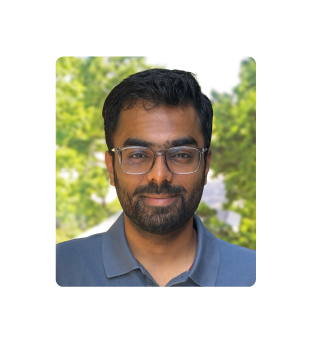
Amrith Setlur, assistant professor of computer science at Cornell Tech
Beginning Fall 2026
Setlur’s research focuses on building AI systems that can continually adapt and improve at test time (e.g., foundation models that learn to scale compute on reasoning and exploration as they solve hard problems). Setlur has been recognized with the JPMorgan Chase AI Ph.D. Fellowship, the CMU School of Computer Science Presidential Fellowship, and the Laude Institute Slingshot Award. His work has been published across leading machine learning venues, including ICLR, ICML, NeurIPS, and Artificial Intelligence and Statistics (AISTATS), with multiple spotlight and oral presentations, as well as workshop best paper awards. Setlur earned his Ph.D. in machine learning from Carnegie Mellon University.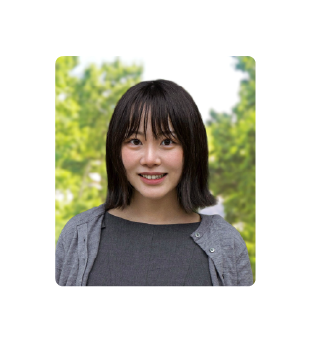
Weijia Shi, assistant professor of computer science at Cornell Tech
Beginning Summer 2027
Shi’s research develops augmented and modular architectures and training algorithms that make language models more controllable, collaborative, and factual. She received her Ph.D. from the University of Washington. Her work received an Outstanding Paper Award at ACL 2024, and she was named a Rising Star in Machine Learning in 2023 and a Rising Star in Data Science in 2024.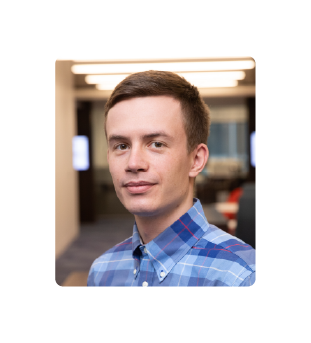
Erasmo Tani, assistant teaching professor of computer science
Beginning Fall 2026
Tani is a computer scientist and mathematician with a passion for teaching and education. When he is not teaching, he researches algorithmic solutions for computational problems arising in data science. More broadly, his work spans different areas of mathematical computer science and machine learning. Before joining Cornell, he was a postdoctoral researcher at Sapienza University of Rome and, briefly, a visitor at the Toyota Technological Institute at Chicago. Tani obtained a Ph.D. in computer science from the University of Chicago, an M.S. in computer science from Boston University, and an M.Eng. in mathematics and computer science from the University of Bristol.
Note: The 13th faculty member added during this recent recruiting season will be announced when they arrive next year.
Hired in 2025, these faculty will begin this year:
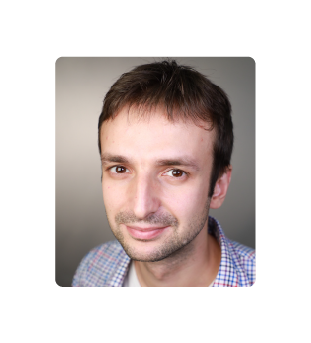
Sasha Golovnev, associate professor of computer science
Beginning in 2026
Golovnev’s research interests include computational complexity, algorithms, pseudorandomness, learning theory, and cryptography. He is currently an assistant professor of computer science at Georgetown University and a visiting professor in the Centre for Quantum Technologies at the National University of Singapore. Previously, Golovnev was a research scientist at Columbia University and Yahoo Research, and a Rabin Postdoctoral Fellow at Harvard University. He received a Ph.D. in computer science from New York University in 2017.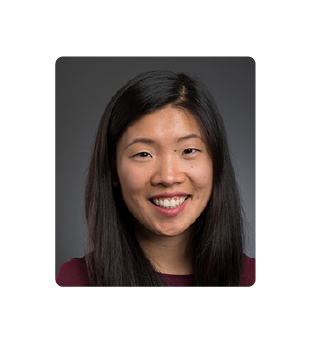
Kaitlyn Zhou, assistant professor of information science
Beginning in November
Her contributions have been recognized at top-tier conferences in natural language processing and human computer interaction. She has received awards such as an NAACL Best Paper Runner-Up, an MIT EECS Rising Star, a Stanford graduate fellowship, and the College of Engineering Dean’s Medal. Her methods have been featured in high-profile news outlets like the New York Times and Wall Street Journal. She received her Ph.D. in computer science from Stanford University. Zhou has long advocated for increased access, inclusion, and equity in higher education and was appointed by the Washington State Governor to serve on the University of Washington Board of Regents.