Become an expert in AI, from building systems to real-world applications.
Starting in Fall 2027, Cornell Bowers is offering two online master's programs in artificial intelligence, each designed for anyone seeking to deepen their expertise in AI. Whether you want to build AI systems from the ground up or transform your profession by applying AI where it matters most, there's a path for your specific career goals.
- The M.S. in artificial intelligence is for professionals who want to understand how AI works and build intelligent systems from first principles, with rigorous training in the mathematics, architectures, and evaluation methods that power modern AI.
- The M.S. in applied artificial intelligence is designed for professionals who want to harness AI within an established field or industry, developing the skills to integrate AI into real-world practice, solve complex challenges, and drive innovation in their organizations.
Both programs pair academic rigor with meaningful faculty engagement, delivered in a flexible online format. Students work closely with Cornell faculty, customize their studies through specialized tracks, and participate in immersive residential experiences on campus that deepen learning and forge lasting connections with classmates and instructors.
M.S. in AI
Overview: Build AI systems from first principles — the mathematics, the architectures, the evaluation
Who's it For: Professionals who want to build advanced AI systems
Academic Background: Basic programming, linear algebra, and statistics
Career Path: Software engineer, machine learning engineer, forward-deployed AI engineer
M.S. in Applied AI
Overview: Apply modern AI within your own professional field, and judge it well
Who's it For: Professionals in fields where AI is becoming essential: health, veterinary medicine, biology, agriculture, the natural and physical sciences, human resources, and more
Academic Background: No programming or mathematics prerequisites
Career Path: Forward-deployed engineer, product manager, clinical AI specialist, AI policy & governance specialist
Cornell – shaping what's next in AI since 1956

#3 in AI
Ranked #3 in AI among U.S. institutions by CS Ranking, Cornell Bowers continues to innovate in the field of AI, with faculty conducting award-winning research in areas such as human-AI interaction, robotics, cybersecurity, computational sustainability, and AI trust and accessibility.

A founding force in AI
Cornell University played a foundational role in the development of AI. In 1956, Cornell Ph.D. graduate and "father of deep learning," Frank Rosenblatt ’50, Ph.D. ’56 (pictured above), demonstrated the perceptron – the first machine that could learn to classify what it saw. Every deep learning system in use today descends from that algorithm. Cornell went on to found one of the world's first computer science departments in 1965, and its faculty have twice won the Turing Award, commonly referred to as the Nobel Prize in computing.
An interdisciplinary curriculum designed for real-world impact.
The Master's in AI and Applied AI programs prepare graduates to create, apply, and lead AI-driven innovation across industries. Students build expertise in foundational AI techniques, apply those methods to solve complex problems in diverse domains, and develop the collaborative skills needed to work at the intersection of technology, business, and society. A strong emphasis on the ethical, legal, and policy implications of AI ensures graduates can evaluate AI's broader impact and develop solutions that are both effective and responsible.
To earn either degree, students will complete 30 credits over the course of 21 months.
Core Courses
Students in both programs complete a shared set of foundational courses that examine the human, societal, and governance dimensions of artificial intelligence:
- Human-AI Interaction
- Ethics, Law, Governance, Policy of AI
Students then complete a two-course foundational sequence in AI tailored to their degree program.
MS in AI
- Fundamentals of Artificial Intelligence
- Deep Learning
MS in Applied AI
- Understanding and Using AI
- Agentic AI Architectures
Areas of Focus
Students graduate with both advanced technical expertise in AI and the domain knowledge needed to address complex challenges in specific industries. These capabilities are developed through areas of focus, each of which combines specialized coursework with opportunities to identify real-world problems, design AI-driven solutions, and develop applications and tools to address them. Areas of focus are developed in collaboration with partners across Cornell University, leveraging deep disciplinary expertise and creating opportunities for interdisciplinary learning.
Students are required to take two elective courses from one of the following areas.
MS in AI
- Deep Learning and Generative AI*
- Data Reasoning*
- Financial Engineering (in partnership with ORIE)
- Health* (in partnership with Weill-Cornell Medicine)
MS in Applied AI
- Fashion (in partnership with the College of Human Ecology)
- Health* (in partnership with Weill-Cornell Medicine)
- Nutrition Science (in partnership with the College of Human Ecology)
- Veterinary Science* (in partnership with the College of Veterinary Medicine)
* Upon matriculation, students can formally declare these areas as concentrations that will appear on their transcript.
Capstone project
The Capstone Project is an opportunity for students to apply their skills to a real-world problem of their choice. Over the course of the second year, students develop a project that addresses a challenge facing their organization or partner institution. Throughout this process, students are mentored by Cornell faculty and leading practitioners in AI to scope problems, develop and evaluate solutions, and communicate their findings.
Residential sessions
During three one-week residential sessions, students will come together in person with their cohort and faculty for course-related activities and the development of their capstone projects. These immersive experiences provide valuable opportunities to collaborate directly with Cornell faculty and researchers, build meaningful connections with peers, expand professional networks, and engage more deeply with the Cornell community. The exact dates and locations for these residential sessions are still being finalized.
Faculty at the forefront.
Cornell Bowers faculty are pushing the boundaries of artificial intelligence across machine learning, robotics, computer vision, natural language processing, human-centered AI, and more. You'll learn from world-renowned researchers whose discoveries influence industry, policy, and society. Their expertise brings the latest advances, emerging challenges, and real-world applications directly into the classroom, preparing you to lead in a rapidly evolving field.
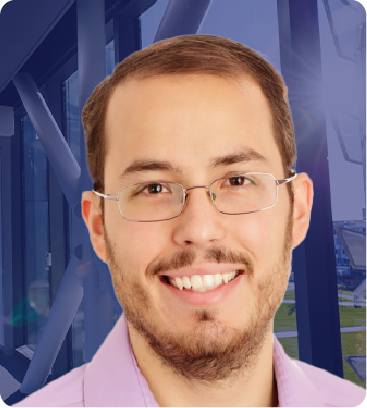
Benjamin Soltoff
Associate Teaching Professor in Information Science
Director, Online Master's Program in Artificial Intelligence
Benjamin Soltoff is an associate teaching professor in information science. He teaches courses on data science, machine learning, research design, and data communication, and enjoys working with individuals from all backgrounds interested in applying computational methods to extract knowledge and inferences from a wide range of domains.

Anil Damle
Associate Professor, Computer Science
Anil Damle is an associate professor of computer science. His research focuses on the development and analysis of robust and efficient algorithms in applied and computational mathematics that exploit structure coming from underlying physical or statistical models. He interfaces with a broad range of application areas and his work is inherently interdisciplinary – with the ultimate goal of developing algorithms that are usable for practitioners.
Faculty at the forefront.
Cornell Bowers faculty are pushing the boundaries of artificial intelligence across machine learning, robotics, computer vision, natural language processing, human-centered AI, and more. You'll learn from world-renowned researchers whose discoveries influence industry, policy, and society. Their expertise brings the latest advances, emerging challenges, and real-world applications directly into the classroom, preparing you to lead in a rapidly evolving field.

Benjamin Soltoff
Associate Teaching Professor in Information Science
Director, Online Master's Program in Artificial Intelligence
Benjamin Soltoff is an associate teaching professor in information science. He teaches courses on data science, machine learning, research design, and data communication, and enjoys working with individuals from all backgrounds interested in applying computational methods to extract knowledge and inferences from a wide range of domains.
View profile
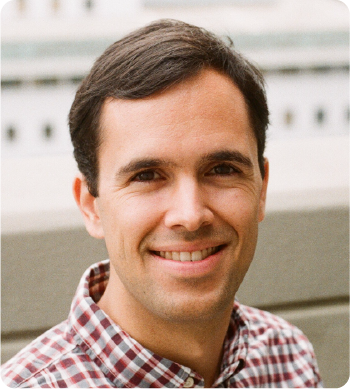
Anil Damle
Associate Professor, Computer Science
Anil Damle is an associate professor of computer science. His research focuses on the development and analysis of robust and efficient algorithms in applied and computational mathematics that exploit structure coming from underlying physical or statistical models. He interfaces with a broad range of application areas and his work is inherently interdisciplinary – with the ultimate goal of developing algorithms that are usable for practitioners.
View profile

Karen Levy
Associate Professor, Information Science
Karen Levy is an associate professor of information science, an associate member of the faculty at Cornell Law School, and field faculty in sociology, science and technology studies, media studies, and data science. She researches the legal, organizational, social, and ethical aspects of data-intensive technologies, particularly the impact of data-intensive technologies on work and workers. She is interested in what happens when we use digital technologies to enforce rules and make decisions about people, particularly in contexts marked by conditions of inequality.
view profile
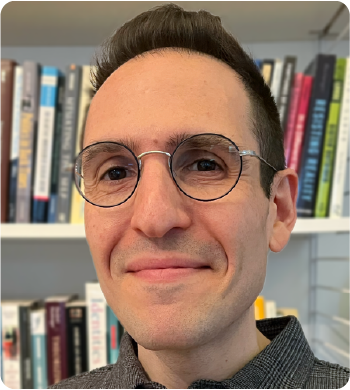
Daniel Susser
Associate Professor, Information Science
Daniel Susser is an associate professor of information science. His research focuses on ethics, politics, and policy in computing. A philosopher by training, he studies governance problems raised by new and emerging data-driven technologies and the underlying conceptual and normative problems that make it difficult to understand and tackle them. He has broad interests in technology ethics and policy, philosophy of technology, and science and technology studies, especially critical questions about data, privacy, and the ethics of automation.
View profile
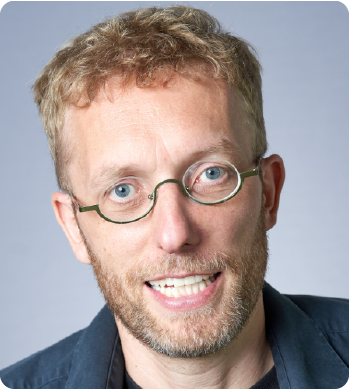
Kilian Weinberger
Professor, Computer Science
Kilian Weinberger is a professor in the Department of Computer Science at Cornell University. Weinberger's research focuses on machine learning and its applications. In particular, he has worked on learning under resource constraints, metric learning, AI in science, computer vision, autonomous vehicles, Gaussian processes, and deep learning.
view profile
Connect + Learn More
The first cohort will begin in Fall 2027 and we'd like to know who's coming! Share a few details to receive program updates, admissions timelines, an invitation to our information sessions, and answers to questions about which degree fits your needs.Master's in AI FAQs
Program fit and credibility
Cornell Bowers faculty are expanding the frontiers of AI across a wide range of domains, united by a commitment to human-centered approaches that prioritize societal impact, ethics, and real-world benefit.
Artificial intelligence is revolutionizing the world around us, and we want to ensure the next generation of AI builders and practitioners know how to develop human-centered applications to solve emerging challenges.
The MS in Artificial Intelligence and MS in Applied Artificial Intelligence programs at the Cornell Ann S. Bowers College of Computing and Information Science are designed to meet the needs of working professionals who seek to responsibly apply AI . workflows to solve problems, create efficiencies, and improve the bottom line. We are looking for leaders with domain expertise who know the problems in their field and want to create AI. empowered solutions.
The MS in AI is for learners who want to design and build AI systems from first principles. They will understand the mathematical and computational underpinnings of AI systems and develop new products and tools to integrate AI into systems. They are interested in careers in software engineering, AI engineering, systems development, etc. Students entering this program will have a background in basic programming, math, and statistics.
The MS in Applied AI is for learners who want to bring AI into their profession and build tools and actionable insights using modern techniques. They seek understanding about how these systems work in order to leverage them in the workplace. They are interested in careers in areas such as product management, AI policy & governance, data analysis. Students entering this program are not expected to have substantial programming or mathematical expertise.|
Cornell Bowers faculty are leaders in human-centered AI, an approach that puts people, ethics, and real-world benefit at the center of how AI systems are designed and used. That perspective runs through both the MS in AI and the MS in Applied AI, so you learn how to build and apply AI responsibly. You can also choose a specialization in fields such as veterinary medicine, health science, or financial engineering, offered with partner units across Cornell including the College of Veterinary Medicine, Weill Cornell Medicine, and the School of Operations Research and Information Engineering, so you learn from faculty with deep expertise in the field where you plan to apply AI.
Unlike most online AI master’s programs, both degrees include residential intensive sessions on campus. These sessions bring you together with your cohort and faculty in person, giving you direct mentorship on your capstone project and professional relationships that continue long after the program ends.
Both degrees are offered through a flexible hybrid format. Students complete their coursework largely in online classes which include a mixture of synchronous and asynchronous activities. During your program, you will learn from your instructors and interact with peers in three residential intensive sessions.
Students who complete the program will earn an MS in AI or MS in Applied AI. Your diploma and transcript make no distinction between residential and online degree programs. Our degrees are designed to be comparable to similar in-person programs at Cornell.
Admissions and Prerequisites
All students must have a bachelor’s degree from an accredited US institution or comparable from a foreign institution.
For the MS in Applied AI, we expect students to come from a wide background of fields of study and industries. There are no formal math or programming prerequisites for this degree program.
For the MS in AI, your bachelor’s degree should be in a computational or quantitative field such as computer science, mathematics, or statistics. Students should have some programming experience.
We do not require nor accept the GRE test for application consideration.
We expect students to have achieved at least a 3.0 GPA (on a 4-point scale). We typically look for a minimum undergraduate GPA of 3.0 (on a 4.0 scale). However, GPA is only one factor in our holistic admissions review. Applicants with a lower GPA may still be considered for admission if they can demonstrate significant professional experience, accomplishments, or other qualifications that indicate their potential for success in the program.
Applications open December 1st, with priority review beginning on February 1st.
After the initial submission deadline, applications will be reviewed on a rolling basis until the final deadline of April 1st.
All applications are for admission in the fall 2027 cohort.
Your application must include at least one letter of recommendation. The letter should be from supervisors, professors, or other individuals who are familiar with your professional or academic work and who can testify to your potential in Artificial Intelligence.
- The graduate school provides blanket exemptions to the English language proficiency requirement for students who:
- Speak English as a first language and are a citizen or permanent resident of a country where English is an official language
- Earned a bachelor’s degree from an accredited U.S. college or university located in the U.S.
- Earned an international equivalent of a U.S. bachelor’s degree from a college or university located in a country where English is an official language, and where English is the language of instruction
- Have studied and/or worked full-time for at least 2 consecutive years within the last 10 years in a country where English is an official and widely spoken language
All other students must demonstrate English language proficiency by completing either the IELTS or TOEFL.
Students cannot defer an admission. All applications are for a start in fall 2027.
Classes include a mixture of synchronous and asynchronous materials. Attendance at synchronous meetings is strongly encouraged, however these sessions are recorded for students who are unable to attend live due to time conflicts.
Students should expect to spend about 18-20 hours per week on their studies.
Both degree programs are 21 months long beginning in the fall. Students complete coursework during the fall and spring semesters, and complete their capstone requirement during the summer, fall, and spring of their second year.
These programs are explicitly designed for working professionals. At this time, we only allow part-time enrollment.
Students complete three residential requirements related to their capstone project:
- One week in August at the beginning of your program, hosted in Ithaca.
- One week during the summer between year 1 and 2, hosted in New York City.
- One week in the spring semester in year 2, location to be determined.
Exact dates and details will be communicated closer to these events.
All students complete a capstone project applying the skills and methods they learn in their degree programs to concrete problems. The projects may be related to your current job, independent projects, or research projects completed with faculty.
Courses are developed and taught by the same world-class Cornell faculty who teach in our residential programs. All courses will include a mixture of synchronous and asynchronous activities, including weekly synchronous sessions with the faculty and teaching assistants.
The latest AI research at Bowers.
- Research + Innovation
- Real-World Impact

- Research + Innovation
- Real-World Impact