
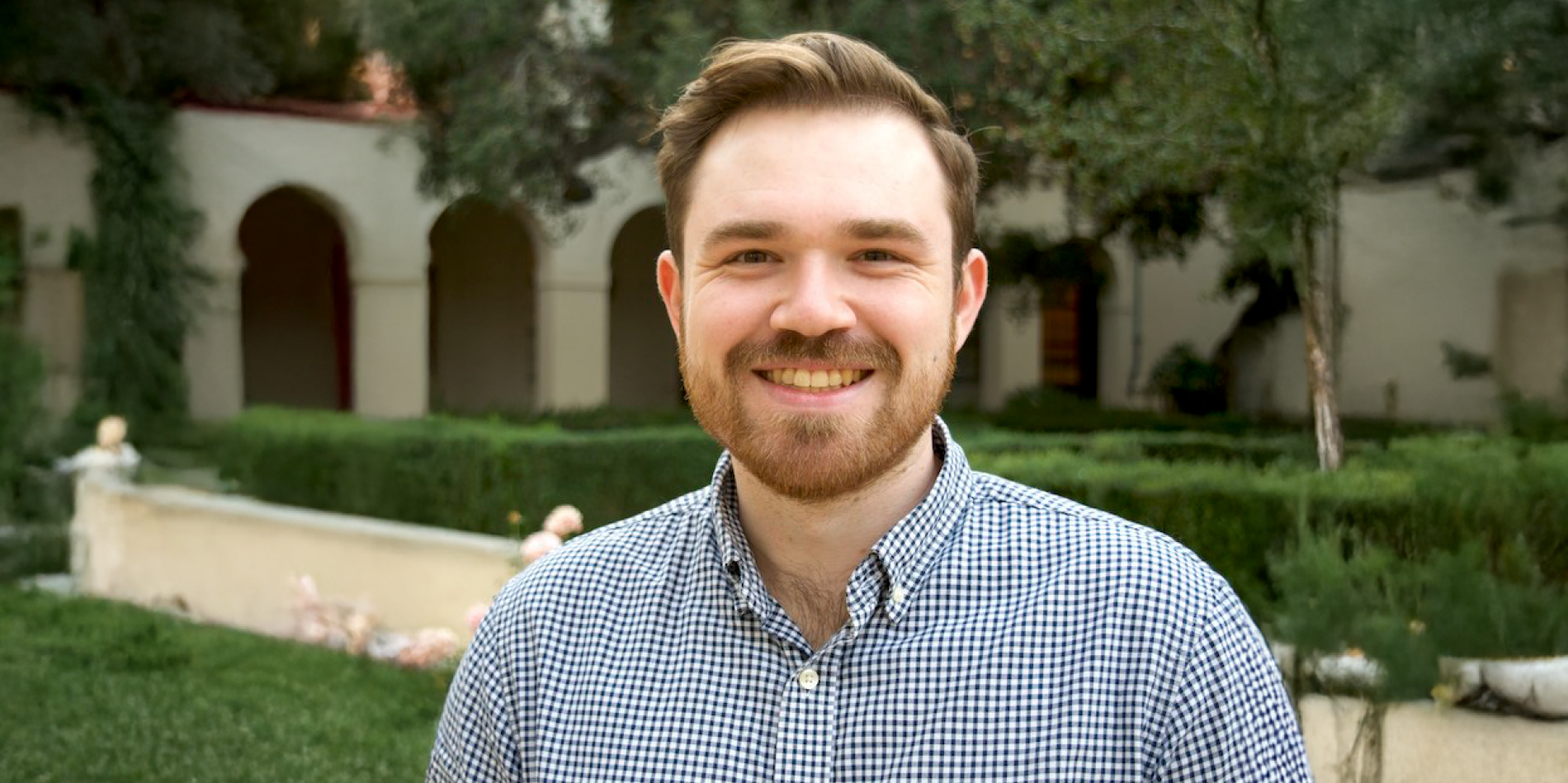
Preston Culbertson is an assistant professor of computer science in the Cornell Ann S. Bowers College of Computing and Information Science. Prior to joining Cornell, he was a research scientist at the Robotics and AI Institute in Cambridge, Mass. He received his Ph.D. in mechanical engineering from Stanford University.
What is your academic focus?
I study robotics, machine learning, and control.
Could you briefly describe your research?
My research develops methods for physically robust robot learning. A central challenge for modern robotics is bridging the gap between abstract task knowledge and the messy, unpredictable physics of the real world. My group addresses this by (1) uncovering why robots fail under small shifts in perception or dynamics, (2) developing algorithms that enable online adaptation and failure anticipation, and (3) building and validating real robotic systems that perform contact-rich, dexterous tasks. The goal is to equip robots with the motor skills needed to reliably use tools, adapt to new environments, and execute high-level plans outside the lab.
What inspired you to pursue a career in this field?
I first wanted to study robotics because, as a field, it is interesting, challenging, and deeply creative (i.e., it requires building and imagining new things constantly). Put simply, robots are just fun to think about. More deeply, I also find the idea of a "post-work" society, where humans are free from work they find dull or dangerous, to be an exciting end-goal for our field.
What do you like to do when you’re not working?
If I'm not working, I'm usually outside - rock climbing, backpacking, or day hiking. A big part of my life has also been outreach and advocacy around housing/homelessness, and I look forward to connecting with some community groups doing this work in Ithaca.
What course are you most looking forward to teaching?
I am excited to co-teach Foundations of Robotics this fall. Robotics is a deeply interdisciplinary field and requires skills from control theory, mechatronics, estimation, and dynamics. The class covers these topics and more. It brings together students from a broad range of backgrounds and gives them the theory and, through hands-on assignments, the practical skills they need to work with real robots.