By Louis DiPietro
On


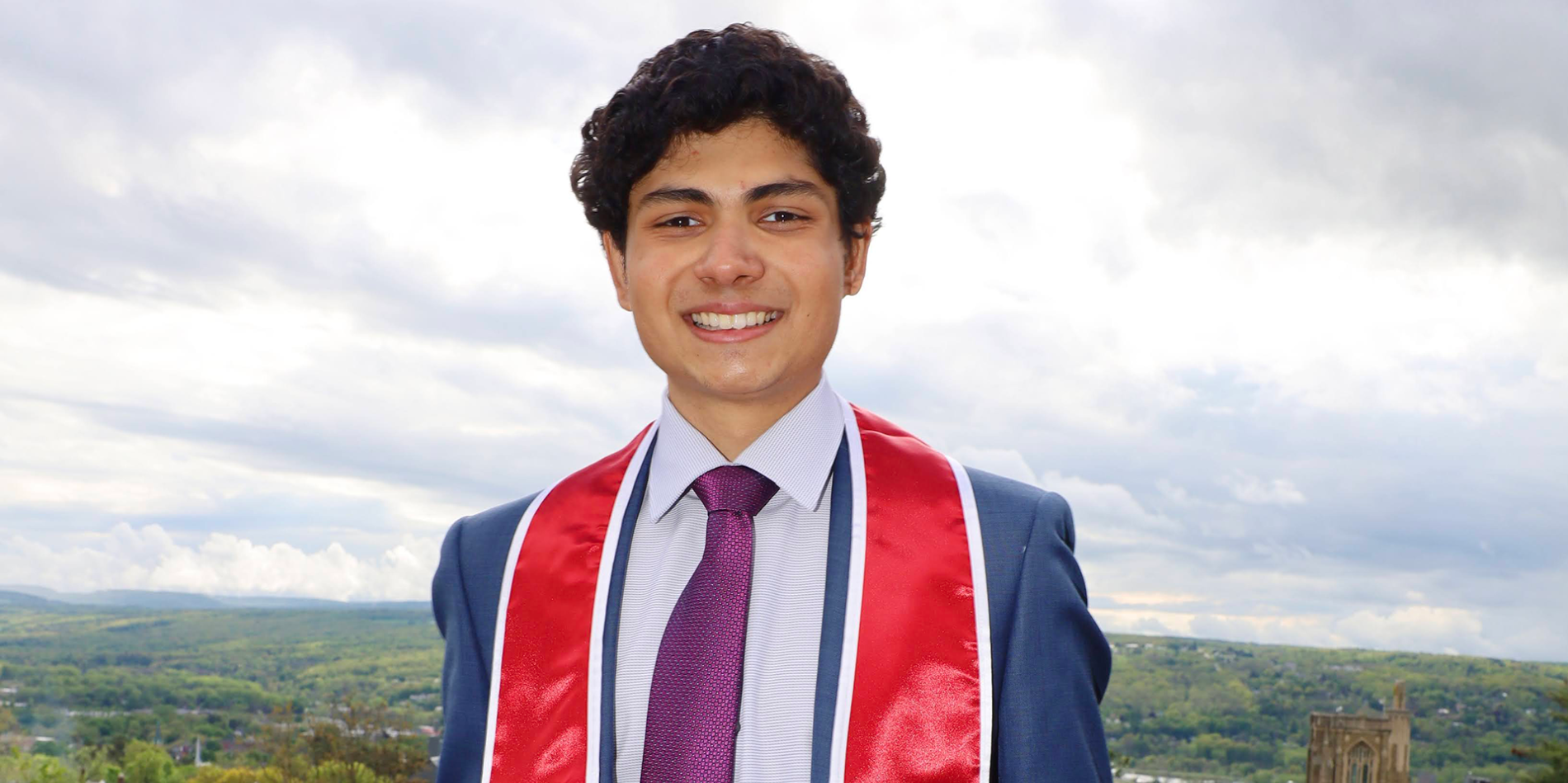
Aditya Vinodh ’24, MPS ’25, had a clear goal in mind once he’d finished up his undergraduate studies at Cornell: bolster his skills in data science in Cornell’s Master of Professional Studies program in Information Science.

He’d minored in data science and even considered adding it as a third major on top of cognitive science and psychology. His advisor suggested the MPS. 

“I knew data science was the right field for me and wanted to further my technical understanding of large language models (LLMs), natural language processing (NLP), and machine learning (ML),” he said. “The MPS was the perfect way to get that deep dive without having to revisit the elementary concepts.”

The MPS in Information Science is a two- or three-semester program designed to give students the technical skills they need to excel in information technology. MPS students are diverse – they are designers, software engineers, legal scholars, and budding product managers. Some arrive directly from undergraduate studies, while others bring industry experience. Regardless of background, MPS graduates leave with critical technical knowledge, savvy leadership and communication skills, and hands-on industry experience to give them an edge in the job hunt.

Today, six months after graduating with his MPS degree, Aditya is a generative artificial intelligence (genAI) data scientist at Blue Yonder, a software company that develops products to aid businesses in supply chain management. Based in Dallas, Aditya is part of a new team using LLMs to develop AI agents to automate the workflows of large-scale retailers and their logistics planners. He landed the job shortly after the start of his second MPS semester and started one week after graduation.

“Access to specialized electives in information science and computer science classes was really useful for me,” Aditya said of his MPS experience. “Everything I learned on a day-to-day basis was directly applicable to the jobs I was applying to.”

Aditya's MPS experience

“Access to specialized electives in information science and computer science classes was really useful for me. Everything I learned on a day-to-day basis was directly applicable to the jobs I was applying to.”
Aditya Vinodh ’24, MPS ’25

Whereas some MPS students might choose courses out of curiosity, Aditya was intentional with every course he enrolled in – perhaps a little too intentional, he joked.  

“The classes I took had a very specific focus,” he said. “I should have probably been a student who relaxed and took a few lighter classes too. But there were just so many interesting areas in IS and CS that I wanted to delve into. So from day one, I focused on the classes I knew I'd gain the most out of.” 

He cited three courses that inspired his interest in LLMs: Natural Language Processing (CS 4740), taught by Claire Cardie, the John C. Ford Professor of Engineering in the Departments of Computer Science and Information Science, and Tanya Goyal, assistant professor of computer science; Advanced Language Technologies (CS 6740), taught by Goyal; and Software Engineering in the Era of Machine Learning (CS 6158), taught by Saikat Dutta, assistant professor of computer science. 

Research was a vital part of Aditya’s MPS journey, too. 

In the summer of 2024 before the MPS, Aditya did a research internship around LLMs with Rene Kizilcec, associate professor of information science and director of Cornell’s Future of Learning Lab. Aditya continued to work with Kizilcec throughout his MPS experience, drafting and revising what would become “Evaluating an AI Tutor for Bias Across Different Foundation Models,” which he presented at the 26th International Conference on Artificial Intelligence in Education in late July. Aditya is the paper’s first author.

"I think this research experience with Professor Rene was a defining point for my professional journey,” he said. “The multiple projects I worked on over those three months are what fueled my passion for AI and LLM engineering."

On top of courses, research, and job hunting, Aditya also served as a teaching assistant for two information science courses.  

For his MPS project, Aditya and his teammates worked with Research Services within Cornell Research and Innovation to develop a chatbot to handle frequently asked questions around funding.  

“That was probably one of the first times I applied the technical skills I’d learned, in a team setting, while juggling the client’s requirements and timeline,” he said. “It was a great experience.” 

As for the job hunt, Aditya discovered early on that mass-applying to online job postings didn’t work. So, he got creative. He hopped on LinkedIn, sought out hiring managers, and messaged them directly with his personal pitch. It got him several interviews, which gave him practice navigating difficult questions and explaining his approach to projects. That experience, combined with a few uplifting sessions with Rebecca Salk, MPS career services advisor, on how to pitch himself, eventually led to a chance referral at Blue Yonder. After an introductory call and three rounds of rigorous technical interviews, Aditya was offered the job. 

“Be open to talking with professors outside of classes and going to their office hours,” Aditya said, offering advice to current and prospective students. “Know your resume like the back of your hand, and find a balance between course work and the job hunt. At times, it can feel that classes aren’t as important, but they are. What you’re learning in class is what you’re going to be referencing in your interviews.” 

Lastly, you get out of the MPS what you put in, he said.

“The MPS offers expertise and practical experience. It offers all these resources to help prepare you for industry. But you’re not just going to be handed a job at the end of the MPS,” he said. “There’s more nuance to it. The MPS’s value is in the courses and in whatever related work you’re doing independently.” 

Connect with Aditya on LinkedIn

Louis DiPietro is a writer for the Cornell Ann S. Bowers College of Computing and Information Science.